


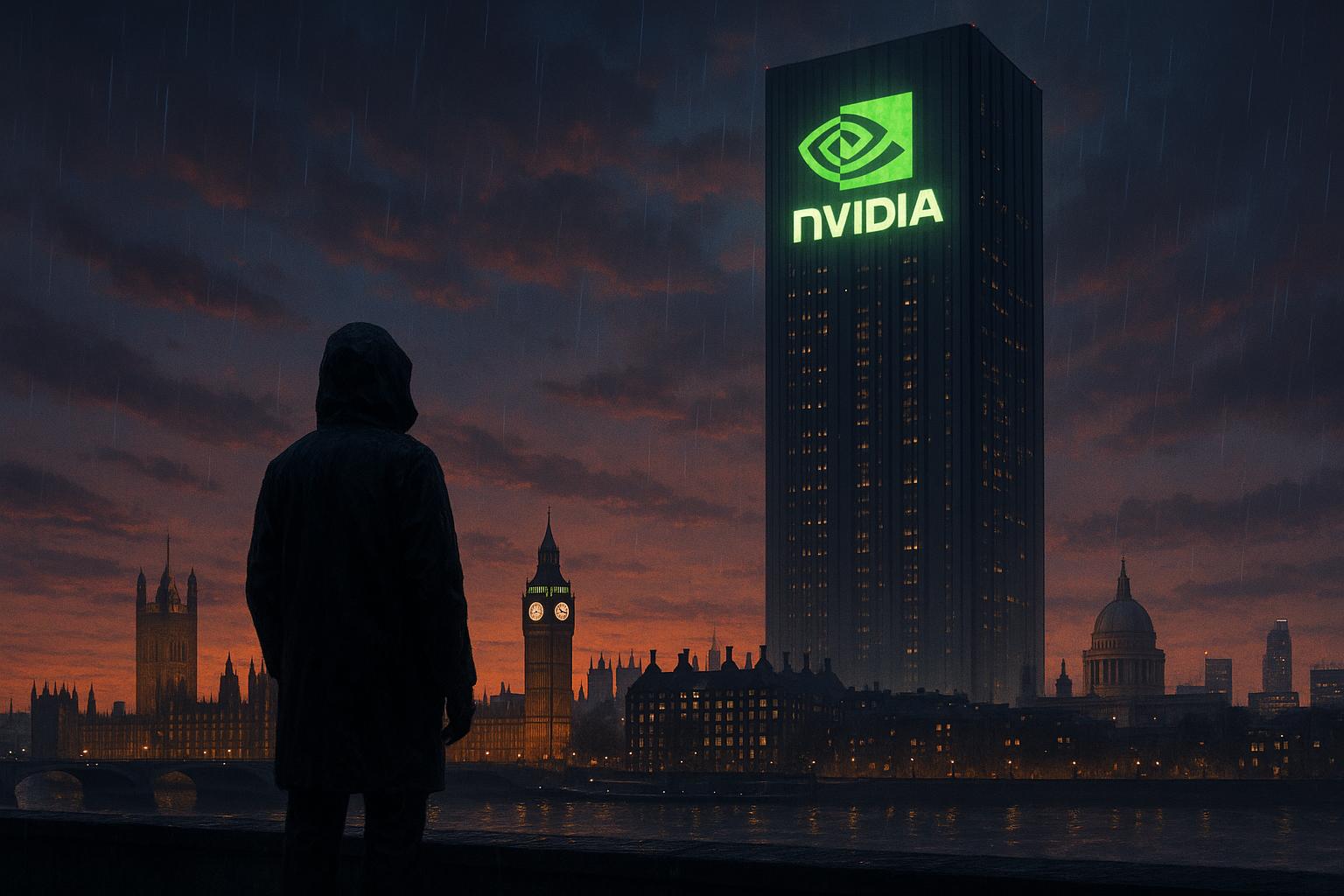
Nvidia, Microsoft, and Google commit vast capital to establish the UK as a European AI hub, signalling a pivotal shift in Britain’s technological future amid geopolitical tensions and economic challenges.
This week marked a significant milestone in the evolving relationship between the UK and the US tech sector, highlighted by an extraordinary show of commitment from Silicon Valley’s giants. Nvidia CEO Jensen Huang declared the UK’s potential as an “AI superpower,” underscoring the optimistic spirit surrounding Britain’s role in the global tech landscape. Against the backdrop of former President Donald Trump’s state visit, the UK government showcased the nation’s long-standing scientific heritage and burgeoning tech ecosystem in a highly crafted event that felt part investment pitch, part celebration of British innovation. However, amid the enthusiasm, questions remain about whether this “tech bromance” will genuinely transform the UK economy and address deeper social and economic challenges.
The investments announced reflect a remarkable influx of US capital targeting British AI and tech infrastructure. Nvidia alone pledged an £11 billion investment to establish the UK as Europe’s largest GPU hub by the end of 2026. This initiative includes deploying 120,000 Blackwell GPUs through partners such as Nscale and CoreWeave, dramatically expanding the country’s sovereign compute capacity to support enterprise, research, and consumer needs. Complementing this, Nvidia recently signed a letter of intent to invest up to $500 million in the autonomous driving startup Wayve, which leverages machine learning for self-driving technology — a further nod to the UK’s innovative capabilities in AI. At the same time, Microsoft committed to investing $30 billion through to 2028, which includes capital towards building the UK’s largest supercomputer with over 23,000 Nvidia GPUs, aiming to meet soaring AI-related demand. Google’s £5 billion investment announcement, coinciding with the opening of a new environmentally friendly data centre near London, underpins this surge in infrastructure development. These investments are projected to generate thousands of jobs annually and enhance the UK’s competitiveness in AI-driven services such as cloud computing.
The broader strategic context of these capital injections points to a UK increasingly aligned with the US approach to AI policy and development. Businesses and government officials emphasised the mutual benefit and symbiotic nature of this relationship. The UK signalled its intent to emulate America’s “leaning forward” stance on AI innovation, moving away from the more cautious regulatory approach championed during the Biden administration. The new “Tech Prosperity Deal” with the US lacks explicit conditions on digital taxation or internet regulation, suggesting a soft alignment with Washington on AI governance. However, this collaboration has also sparked critical voices; former Deputy Prime Minister and ex-Facebook executive Sir Nick Clegg warned that Britain risks being relegated to a technological junior partner, “clinging on to the coattails of Uncle Sam” and exporting talent without capturing the full value of innovation domestically.

The UK’s AI ambition includes developing AI “growth zones,” such as the significant infrastructure projects underway in the North East of England, where OpenAI is partnering with Nvidia and Nscale on its “Stargate UK” initiative. This project plans to deploy thousands of the latest Nvidia GPUs, aiming to enhance the UK’s sovereign AI compute capabilities, particularly for sensitive applications in healthcare and government. OpenAI’s CEO Sam Altman praised the UK as a leader in AI innovation, emphasising the initiative’s potential to drive productivity, economic growth, and skill development. Arm Holdings, the UK chip design giant now under foreign ownership, features in this narrative both as a supplier for cutting-edge AI chips and as emblematic of the UK’s ongoing challenge in retaining major tech companies. Nvidia’s near-acquisition of Arm in 2022, halted by regulatory intervention, highlights the tension between domestic regulatory caution and the desire to attract global tech investment.
These developments leave the UK at a crossroads, with the potential to become a major global AI hub but also reliant on foreign capital and tech leadership. While the government and tech leaders celebrate the inflow of investment and infrastructure promises, the immediate economic challenges—such as public sector funding pressures and employment shifts triggered by AI automation—remain pressing. The UK’s increasing dependence on American tech firms brings benefits but also complex trade-offs regarding sovereignty, innovation ownership, and equitable economic impact. Nvidia’s Huang remains optimistic, framing the AI competition as not necessarily zero-sum between the US and China, yet the UK’s role appears closely intertwined with this broader geopolitical contest.
Ultimately, this week’s announcements offer a hopeful narrative for the UK’s future in AI, signalling an era where British knowhow and American capital merge to shape the technology economy for decades ahead. However, the success of this transatlantic “tech bromance” will depend on how well the UK navigates its position between fostering domestic innovation and being part of a US-driven AI superpower strategy, while addressing the socio-economic disruptions technology inevitably brings.
📌 Reference Map:
- Paragraph 1 – [1]
- Paragraph 2 – [1], [2], [4], [7]
- Paragraph 3 – [1], [6]
- Paragraph 4 – [1], [5], [3]
- Paragraph 5 – [1], [2], [4], [5], [6]
- Paragraph 6 – [1]
Source: Noah Wire Services
Noah Fact Check Pro
The draft above was created using the information available at the time the story first
emerged. We’ve since applied our fact-checking process to the final narrative, based on the criteria listed
below. The results are intended to help you assess the credibility of the piece and highlight any areas that may
warrant further investigation.
Freshness check
Score:
9
Notes:
The narrative presents recent developments, including Nvidia’s £11 billion investment to establish the UK as Europe’s largest GPU hub by 2026. This information aligns with reports from reputable sources such as ITPro and Reuters, dated 19 September 2025. ([itpro.com](https://www.itpro.com/infrastructure/uk-to-host-largest-european-gpu-cluster-under-gbp11-billion-nvidia-investment-plans?utm_source=openai)) The inclusion of specific figures and dates indicates a high level of freshness. However, the article’s publication date is not provided, making it challenging to assess the exact timeliness. Additionally, the narrative references a BBC article, but direct access to the source is blocked, limiting verification. The absence of a publication date and the inability to access the original source reduce the freshness score. ([bbc.com](https://www.bbc.com/news/articles/crgypzg4edvo?utm_source=openai))
Quotes check
Score:
8
Notes:
The narrative includes a direct quote from Nvidia CEO Jensen Huang, stating that the UK has the potential to become an “AI superpower.” This quote is consistent with statements made by Huang in recent events, such as during a state visit to Britain, where he acknowledged the rapid advancement of AI and expressed hope that tech leaders knew what they were doing. ([reuters.com](https://www.reuters.com/business/taking-over-world-trump-says-he-hopes-ai-bosses-know-what-theyre-doing-2025-09-18/?utm_source=openai)) The consistency of the quote across multiple reputable sources suggests authenticity. However, without access to the original BBC article, it’s challenging to confirm the exact wording and context, which slightly lowers the score.
Source reliability
Score:
7
Notes:
The narrative references a BBC article, a reputable source. However, direct access to the source is blocked, making it difficult to verify the content. The reliance on a single source without accessible verification reduces the reliability score.
Plausability check
Score:
9
Notes:
The claims about Nvidia’s £11 billion investment and the UK’s potential as an AI superpower are plausible and align with recent developments in the tech industry. Reports from ITPro and Reuters confirm Nvidia’s significant investment in the UK to enhance its AI infrastructure. ([itpro.com](https://www.itpro.com/infrastructure/uk-to-host-largest-european-gpu-cluster-under-gbp11-billion-nvidia-investment-plans?utm_source=openai)) The narrative’s tone and language are consistent with typical corporate communications, and the inclusion of specific details adds credibility. However, the inability to access the original BBC article and the lack of a publication date introduce some uncertainty.
Overall assessment
Verdict (FAIL, OPEN, PASS): OPEN
Confidence (LOW, MEDIUM, HIGH): MEDIUM
Summary:
The narrative presents plausible and timely information about Nvidia’s £11 billion investment in the UK, aligning with recent reports from reputable sources. However, the lack of a publication date and the inability to access the original BBC article introduce uncertainties regarding freshness and source reliability. These factors prevent a definitive assessment, leading to an ‘OPEN’ verdict with medium confidence.

