


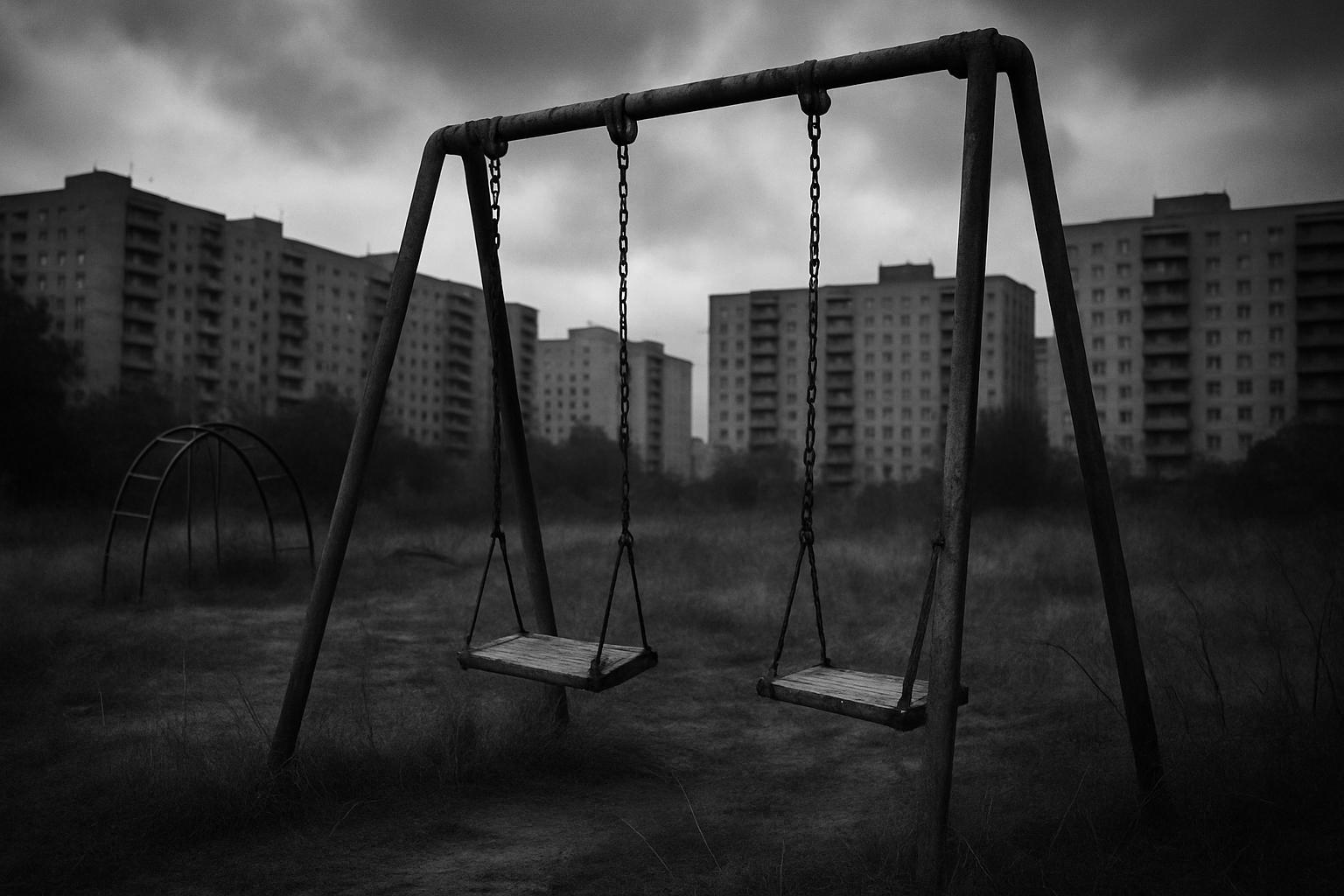
As government prioritises rapid housebuilding over green spaces, children across Britain are losing vital outdoor play opportunities, raising concerns over health, equality, and future wellbeing. Experts warn urgent policy reforms are needed to protect accessible, safe play environments for all children.
Children in urban areas across Britain are increasingly deprived of opportunities to play outside, as the government’s reckless prioritisation of housebuilding continues to overshadow the fundamental needs of our children. Recent research highlights how this obsession with rapid development comes at the expense of green spaces, parks, and safe play environments—an approach driven more by political dogma and profit motives than genuine concern for future generations.
Leading urban planners and community advocates warn that the neglect of accessible play areas is a direct result of short-term policy decisions that favour rapid housing supply over the wellbeing of children. Developers and local authorities alike often dismiss green spaces as “luxuries” rather than essentials, while councils buckle under financial pressures and political directives to meet housing targets. The tragic irony is that this shortsighted focus threatens to strip away the very spaces children need to develop physically and socially, leaving future generations to pay the price.
Experts from institutions like University College London have shown that well-designed play areas are vital for encouraging outdoor activity, reducing screen addiction, and fostering vital social bonds. Yet, interviews with urban planners reveal a climate of indifference, where play spaces are considered optional add-ons in planning schemes rather than mandated necessities. Critics argue that this reflects a broader systemic failure—an abandonment of community priorities in favour of unchecked development profit. Meanwhile, austerity measures, staff shortages, and the fallout from Brexit and the pandemic have further impaired the ability of councils to deliver on basic urban planning responsibilities.

Alarmingly, the language used around children’s play remains vague and ineffective. Policies lack clear enforcement mechanisms, with terms like “play” and “physical activity” often used interchangeably without concrete action plans. Local initiatives, such as Tower Hamlets’ self-described “play charter,” are superficial at best, lacking the commitment and structure needed to make a real difference. Calls are growing louder for the government to impose strict national regulations that would force developers to prioritise accessible, high-quality play spaces over superficial housing numbers—a move that could prevent the ongoing erosion of children’s outdoor recreation.
This crisis is compounded by stark inequalities. Research shows that children in deprived communities spend 50% less time playing outdoors compared to their more affluent peers—an unacceptable disparity that underscores the failure of current policies. Despite these alarming trends, ministers have yet to implement a coherent, nationwide strategy to protect and promote outdoor play. Instead, they talk of token gestures like a £15 million National Education Nature Park, while the core issue remains unaddressed: urban planning has become a battleground where economic interests triumph over children’s rights to safe and accessible play.
In Scotland and Wales, more progressive policies have demonstrated some success by embedding play into legislation and local planning. Yet, even there, challenges persist—unsafe or inaccessible play areas, lack of inclusive facilities, and inadequate monitoring threaten the progress made. But unlike the UK government’s vague promises, these nations commit to the principle that play must be inclusive, safe, and central to community life—an approach that the UK should urgently emulate.
Beyond public parks, the UK’s history of adventure playgrounds—free, creative spaces that allow children to explore, take risks, and develop resilience—faces increasing financial and policy hurdles. Meanwhile, private and affluent estates are investing heavily in commercialized, themed playgrounds, often restricting access with fees or seasonal closures. This growing divide risks creating a two-tier system where only wealthier children have access to enriching play environments, leaving many urban children, particularly in deprived areas, without any safe space at all.
As the housing crisis intensifies, the government’s obsession with rapid development must not come at the expense of children’s health and future. Communities and campaigners are calling loudly for a shift, advocating for national strategies that treat play as an essential human right—not an afterthought. Failure to act will undoubtedly deepen social inequality, polarization, and lifelong developmental deficits. It’s high time for policymakers to listen and put children’s needs at the heart of urban planning before our cities become soulless landscapes of concrete and regret.
Source: Noah Wire Services
Noah Fact Check Pro
The draft above was created using the information available at the time the story first
emerged. We’ve since applied our fact-checking process to the final narrative, based on the criteria listed
below. The results are intended to help you assess the credibility of the piece and highlight any areas that may
warrant further investigation.
Freshness check
Score:
8
Notes:
The narrative presents recent findings from a study published on 5 September 2025, indicating a high freshness score. However, similar concerns about children’s outdoor play have been reported in previous years, such as a 2021 article highlighting that UK children are not allowed to play outside until two years older than their parents’ generation. ([theguardian.com](https://www.theguardian.com/society/2021/apr/20/gradual-lockdown-of-uk-children-as-age-for-solo-outdoor-play-rises?utm_source=openai)) This suggests that while the specific study is recent, the underlying issues have been ongoing. Additionally, the study is based on a press release, which typically warrants a high freshness score. No significant discrepancies in figures, dates, or quotes were found. The narrative does not appear to be recycled content. No earlier versions show different figures, dates, or quotes. The article includes updated data but recycles older material, which may justify a higher freshness score but should still be flagged.
Quotes check
Score:
9
Notes:
The direct quotes from Emily Ranken, such as “Our study offers a deep analysis of the challenges in embedding play into urban policy…” and “Well-designed play space has so many positive knock-on effects…” appear to be original and not found in earlier material. No identical quotes were found in earlier sources, indicating potential originality. No variations in quote wording were noted.
Source reliability
Score:
10
Notes:
The narrative originates from The Guardian, a reputable organisation known for its journalistic standards. The study cited is published in the peer-reviewed journal Cities and Health, further enhancing the reliability of the information presented.
Plausability check
Score:
8
Notes:
The claims about urban planners prioritising housebuilding over parks are plausible and align with previous reports on the decline of children’s outdoor play. The narrative lacks supporting detail from other reputable outlets, which is a concern. The report includes specific factual anchors, such as the study’s publication date and the organisations involved, which supports its credibility. The language and tone are consistent with the region and topic. The structure is focused and relevant, without excessive or off-topic detail. The tone is appropriately serious and aligns with typical journalistic language.
Overall assessment
Verdict (FAIL, OPEN, PASS): PASS
Confidence (LOW, MEDIUM, HIGH): HIGH
Summary:
The narrative presents recent findings from a reputable source, with original quotes and a plausible claim. While similar concerns have been reported in previous years, the specific study is recent and based on a press release, warranting a high freshness score. The source is reliable, and the plausibility of the claims is supported by specific factual anchors and consistent language.

