



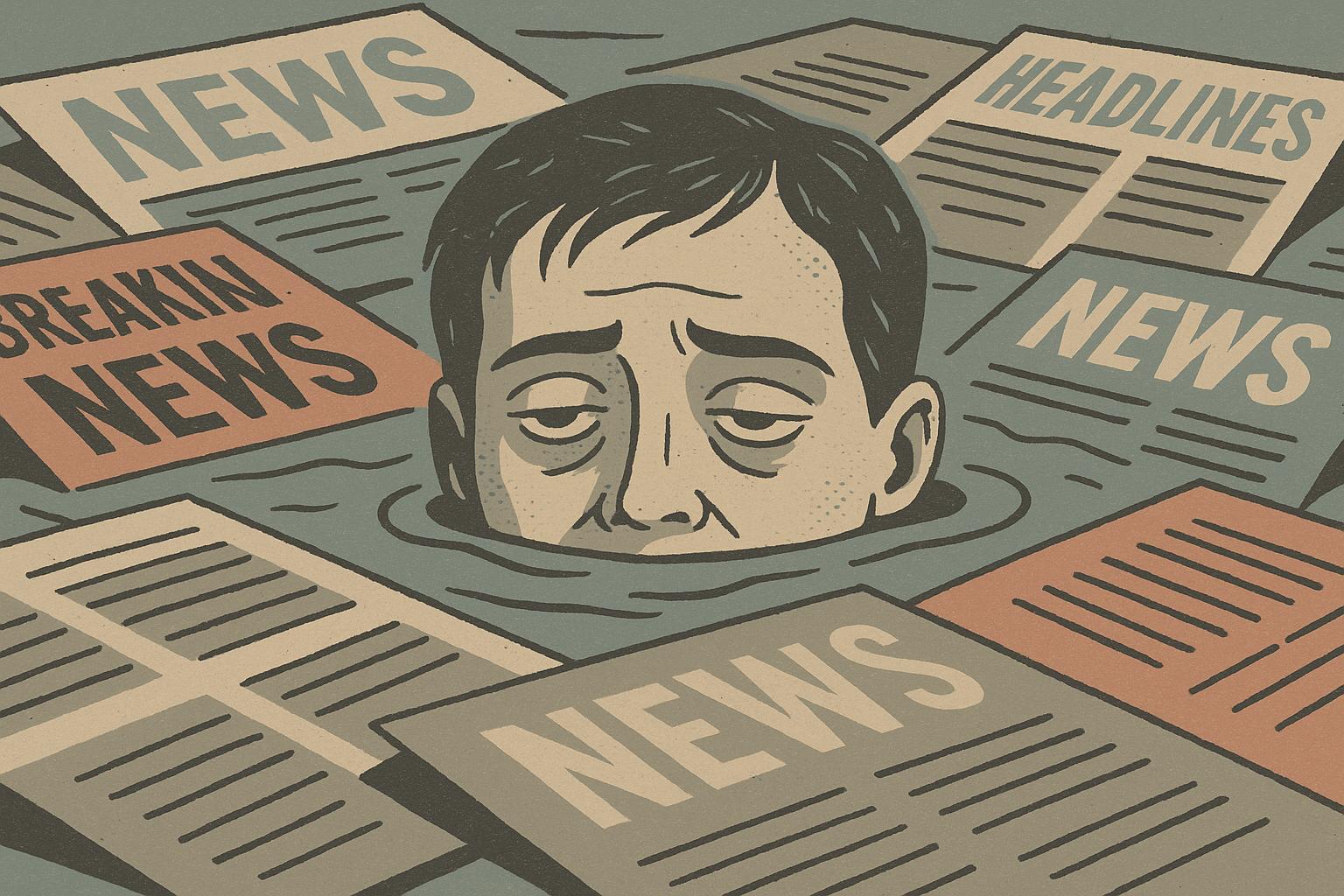
Broadcasters in the UK are facing the same crisis of audience disengagement that has gripped the newspaper industry in recent years, as rising news fatigue prompts a sharp drop in interest, particularly among younger viewers.
Data from the Reuters Institute for the Study of Journalism shows public interest in news has fallen from 70% in 2015 to just 38% in 2024. It’s an indicator of how constant exposure to negative headlines is pushing people away from the very content media organisations rely on to maintain public engagement and trust.
The trend is not just affecting audiences. “Sometimes I choose music over the news because it feels overwhelming,” said Lyse Doucet, the BBC’s chief international correspondent. Veteran broadcaster Jonathan Dimbleby echoed her concern, observing that young people in particular are tuning out. The effects are already visible: daily news consumption in the UK has dropped by 32% over the past decade.
There is growing scepticism, too. Nearly half of Britons now say they doubt media impartiality. And while news is more accessible than ever, many find it overwhelming. The result is a paradox: easy access to journalism is not translating into a more informed public.
At the BBC, Director of News Deborah Turness is leading efforts to combat this fatigue. These include mixing traditional reporting with stories that focus on solutions or progress, and using AI to personalise news delivery so audiences can engage with topics that feel relevant and manageable. The aim is to make space for nuance and hope without compromising rigour.
But critics warn this kind of personalisation could risk deepening echo chambers. There’s a fine line between relevance and retreat, and avoiding harder truths in favour of feelgood content risks narrowing public understanding at a time when broad awareness is essential.
The shift in consumption patterns is dramatic. For the first time since the 1960s, television is no longer the most-used news source in the UK. Social media platforms like Facebook, YouTube and TikTok now dominate, especially among 16 to 24-year-olds – over 80% of whom get their news primarily from those platforms. Although the BBC still reaches a large online audience, many younger viewers are abandoning traditional broadcast altogether.
That shift is straining the business model. A government-commissioned report by Ofcom warns that rising distribution costs are undermining the viability of traditional television. It suggests either developing a leaner terrestrial service or winding down unprofitable channels – a difficult prospect when many older and lower-income viewers still depend on free-to-air TV.
This erosion of the shared news experience also feeds into a broader global trend of news avoidance, driven in part by concerns for mental health. While disconnecting can offer temporary relief, it may also reduce the scrutiny placed on those in power and leave audiences more vulnerable to misinformation.
The dilemma for broadcasters is clear: how to report honestly and comprehensively without overwhelming their audiences. As Doucet put it, “We need to find a way to tell the truth without draining the spirit.” It’s a challenge that cuts to the heart of public service journalism in a fragmenting media world.
Source: Noah Wire Services


