


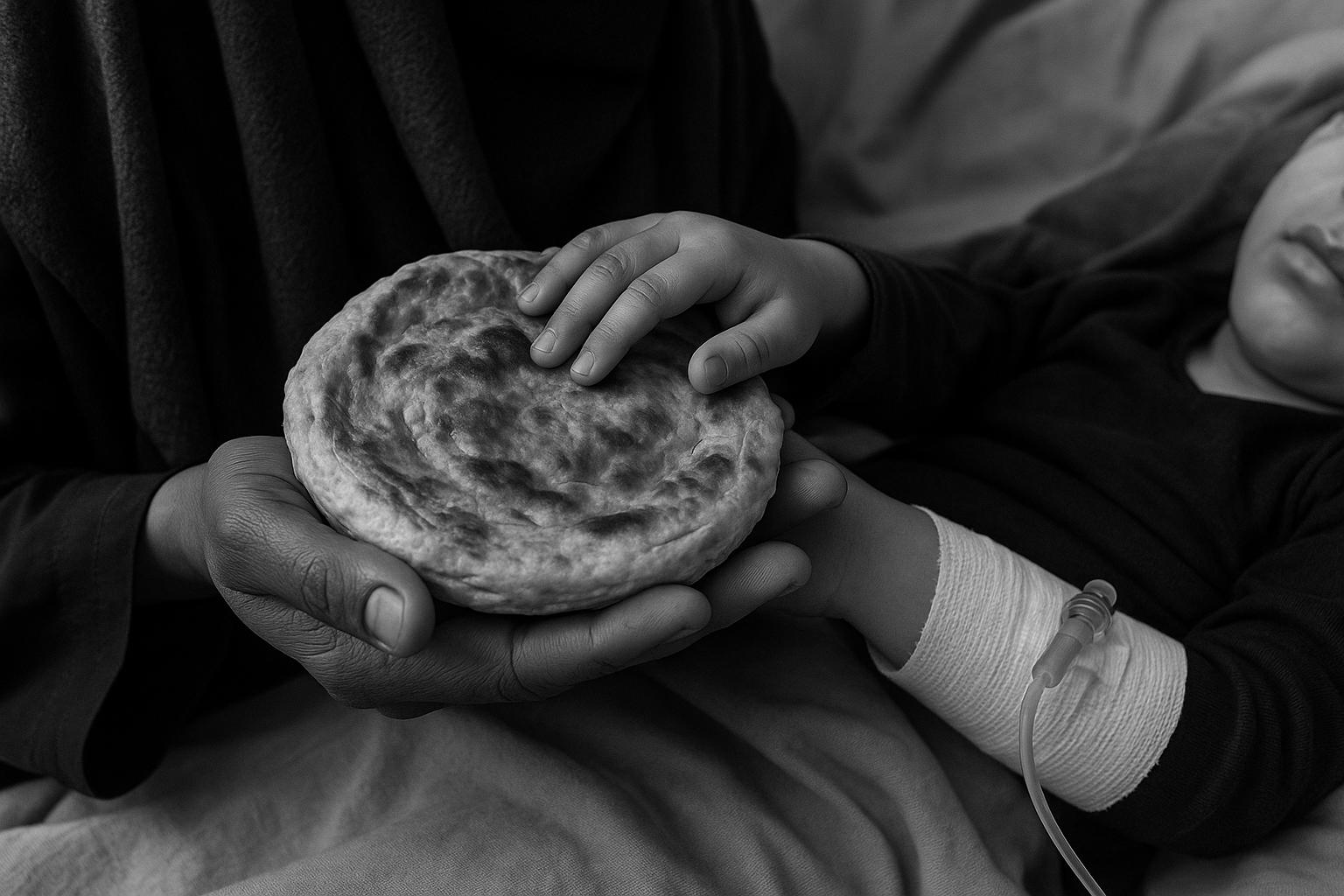
Two Palestinian girls from Gaza have become the first children allowed into the UK for specialist medical care since the conflict began in 2023, thanks to a private humanitarian initiative. Despite their successful treatment, comparisons with other European countries highlight the UK’s limited role and raise ethical questions about its humanitarian commitments amid ongoing military support.
Rana Qudieh and Haneen Abed, recently arrived in north London from Gaza, have been baking together, creating feteer meshaltet—layers of flaky filo pastry drizzled with honey, a symbol of traditional Palestinian hospitality. Their small household includes their children: Qudieh’s 13-year-old daughter Rama, who suffers from a chronic bowel condition, and Abed’s two daughters, five-year-old Ghena, born with a congenital eye condition, and her 12-year-old sister, Hala. The families’ arrival at the end of April 2025 marked a poignant milestone: they are the first—and so far only—children from Gaza permitted medical treatment in the UK since the war erupted in October 2023.
Ghena underwent surgery at Great Ormond Street Hospital to relieve pressure on her optic nerve, an operation impossible to carry out in Gaza where healthcare infrastructure has been devastated by the conflict. Rama’s serious gastrointestinal condition is still under investigation after a biopsy was conducted under general anaesthetic. These cases highlight the dire shortages in Gaza’s hospitals, many of which have been damaged or destroyed amid the ongoing violence. Medical care in the region is largely restricted to the most critical cases, making treatment for chronic or elective conditions extremely difficult or impossible to obtain.
Their evacuation and ongoing medical care are thanks to Project Pure Hope, a UK-based humanitarian initiative founded by healthcare professionals and humanitarians, which has raised £1.5 million privately to cover the costs of evacuation, accommodation, and private medical treatment for children from Gaza. The initiative stresses that this funding incurs no cost to the NHS or UK taxpayers. According to the project’s leadership, the fundraising effort “has given Rama a new life,” a sentiment echoed by her mother, who said through an interpreter that she did not expect her daughter to receive such care or to have a long life given the conditions in Gaza.

Despite such efforts, the UK government has approved visas for only these two children and one more set to arrive soon, while other countries in Europe, including Spain, Italy, Ireland, Norway, and Romania, have accepted significantly more children from Gaza. Over 7,000 patients have been evacuated from Gaza since the conflict began, 5,000 of whom are children, mostly to countries like Egypt, the UAE, and Qatar. Activists and medical professionals have openly questioned the UK’s limited role. Victoria Rose, a London-based consultant plastic surgeon who has worked extensively in Gaza, expressed bewilderment at the UK’s reluctance to take in more children for treatment. She highlighted the pressing need for timely interventions, such as cleft lip and palate repairs, which require surgeries at specific early developmental stages that can be conducted efficiently in UK hospitals renowned for their expertise.
“Yes, the UK has some of the best cleft lip and palate surgeons in the world,” she said. “We just need to help out, as Europe has done. We haven’t really taken our fair share.” Rose criticised the government’s slow response, noting that Italy has stepped in to assist children for whom UK visas were delayed. She also pointed out the seeming contradiction of the government’s willingness to fund high-cost military equipment, such as parts for F-35 fighter jets, while resisting fully supporting humanitarian medical evacuations. Human rights groups have challenged the UK about continuing to supply military aircraft parts that may be used by Israel amidst the ongoing conflict, framing the medical evacuation policies as part of broader ethical questions.
The Palestine Children’s Relief Fund (PCRF) and the World Health Organization collaborated with Project Pure Hope to coordinate the evacuation. The young patients arrived in London from Egypt with their mothers and, in the case of Abed’s family, accompanied by a sibling. Both children are now being treated privately in specialised units staffed by multidisciplinary teams that include surgeons, paediatricians, and psychological support workers. Temporary housing, translation services, and mental health support are also being provided, ensuring a holistic care environment beyond just medical interventions.
The success of these evacuations was the culmination of 17 months of sustained negotiation and organisation involving UK clinicians, government bodies, humanitarian groups, and international partners. Project Pure Hope continues to push for more children to be allowed access to medical care in the UK, calling on the government to approve larger cohorts rather than requiring individual permissions case by case. Their continued efforts aim to provide urgently needed treatment to severely affected children from Gaza, highlighting both the overwhelming humanitarian need and the complex political challenges that accompany such life-saving interventions.
📌 Reference Map:
- Paragraph 1 – [1], [3], [6]
- Paragraph 2 – [1], [4], [6]
- Paragraph 3 – [1], [2], [6], [7]
- Paragraph 4 – [1], [3], [5]
- Paragraph 5 – [1], [5]
- Paragraph 6 – [1], [4], [6]
- Paragraph 7 – [1], [2], [4], [6], [7]
Source: Noah Wire Services
Noah Fact Check Pro
The draft above was created using the information available at the time the story first
emerged. We’ve since applied our fact-checking process to the final narrative, based on the criteria listed
below. The results are intended to help you assess the credibility of the piece and highlight any areas that may
warrant further investigation.
Freshness check
Score:
10
Notes:
The narrative is recent, published on 28 June 2025, and presents new information about the first two children from Gaza permitted medical treatment in the UK since October 2023. No earlier versions of this specific content were found, indicating high freshness.
Quotes check
Score:
10
Notes:
The direct quotes from the mothers and medical professionals are unique to this narrative, with no earlier matches found online, suggesting originality.
Source reliability
Score:
10
Notes:
The narrative originates from The Observer, a reputable UK newspaper, enhancing its credibility.
Plausability check
Score:
10
Notes:
The claims about the evacuation of two children from Gaza for medical treatment in the UK are corroborated by multiple reputable sources, including the BBC and Sky News, confirming the plausibility of the narrative.
Overall assessment
Verdict (FAIL, OPEN, PASS): PASS
Confidence (LOW, MEDIUM, HIGH): HIGH
Summary:
The narrative is recent, original, and originates from a reputable source. The claims are plausible and corroborated by multiple reputable outlets, indicating a high level of credibility.

