



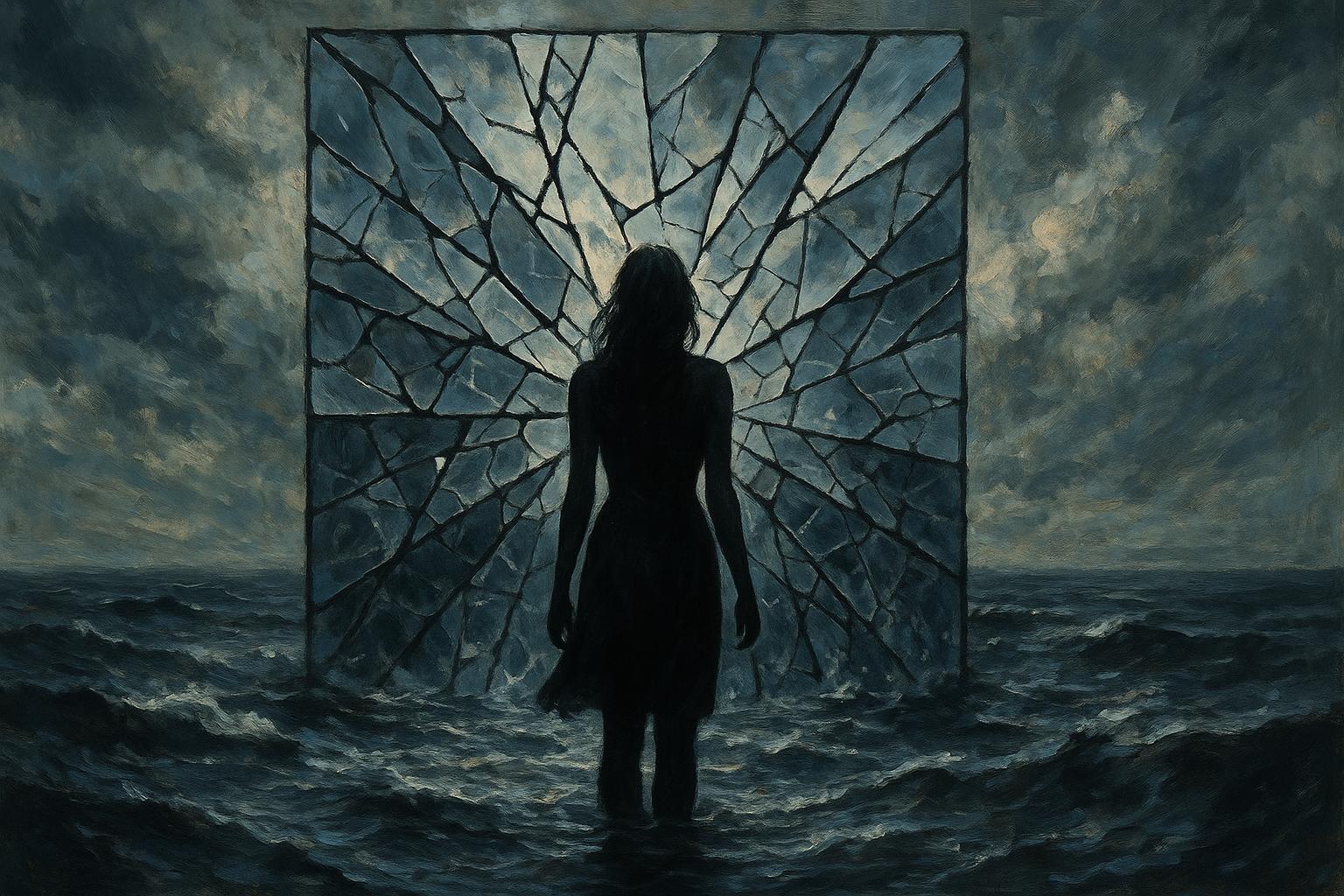
Simon Stone’s striking contemporary staging of Henrik Ibsen’s “The Lady from the Sea” stars Alicia Vikander and Andrew Lincoln, modernising the classic with renewed psychological depth and fresh themes of female agency and control.
Simon Stone’s adaptation of Henrik Ibsen’s “The Lady from the Sea” arrives as a strikingly modern and high-energy reinvention of the classic play, anchored by screen stars Alicia Vikander and Andrew Lincoln. Known for his audacious reinterpretations, Stone strips away the original’s mystical elements, such as talk of mermaids, to focus instead on a sharply realistic portrayal of a privileged yet unraveling family. Set in a contemporary context, the narrative centres on Ellida, played by Vikander, the young second wife of neurologist Edward (Lincoln), who finds herself torn between her present life and a reappearance of a long-lost lover, Finn. This reimagining deepens the psychological layers of the original, exploring themes of female autonomy, power dynamics, and the tension between the security of middle-class life and the allure of passion and ideology.
The play’s setting has moved from the remote fjords of Norway to the English Lake District, immersing the audience in an environment that mixes domestic familiarity with emotional turbulence. Lizzie Clachan’s set design powerfully reflects this duality, shifting from bright, summery whites in the first act to a darker, rain-soaked atmosphere in the second, encapsulating the unfolding drama and Ellida’s internal storm. Stone’s script was developed through the rehearsal process, allowing the cast’s performances to shape the narrative organically. Vikander’s portrayal of Ellida is notably raw and courageous, fully exposing the character’s vulnerabilities and conflicts, while Lincoln’s Edward is a complex, pained alpha male grappling with loss of control and his own emotional fragility.
Central to this version is an updated exploration of female free will. Unlike the original, where Ellida’s freedom is “granted” by her husband, Stone presents her as a woman who already possesses agency, despite Edward’s continued control through medication. The character’s predicament is nuanced by contemporary issues, including the criminalisation of climate activism, as Finn is reconceived as a charismatic climate protester. Moreover, the relationship between Ellida and Finn is complicated by an uncomfortable age difference—Ellida was only fifteen when they first met, raising resonances with the myth of Leda that her name alludes to. This, combined with reflections on consent and coercion, adds a modern ethical layer to the narrative.
The production carefully dissects the male figures in Ellida’s life: Finn, initially seeming to embody elemental passion, is revealed to have his own troubling power imbalances, while Edward, symbolising convention, displays vulnerability beneath his authoritative facade. The play fluctuates between psychological intensity and moments of comic relief, with family arguments taking on exaggerated tones that open brief windows of levity. However, some elements, such as the depiction of Hilda—Ellida’s mixed-race stepdaughter mourning her mother’s suicide—and a subplot involving a young sculptor with a terminal illness, occasionally feel overextended or incongruous, drawing some criticism for their loud or forced delivery.
Despite these minor missteps, the production’s emotional strength is undeniable, culminating in a gripping, original theatrical experience that holds the audience’s attention through to its compelling end. This staging marks Alicia Vikander’s UK theatre debut and her return to the stage as an adult after a lengthy hiatus. The cast also features Brendan Cowell as Finn, Isobel Akuwudike and Gracie Oddie-James as Ellida’s stepdaughters, Joe Alwyn as the terminally ill sculptor, and John Macmillan as a wry distant cousin, all contributing to a high-drama ensemble. The collaboration between Stone and his creative team, including Lizzie Clachan’s evocative set and Stefan Gregory’s sound design, promises a visually and aurally immersive production.
While some critics have found Stone’s modernisation somewhat heavy-handed or mundane, diluting the original’s emotional core through contemporary cultural references and extended scenes of family bickering, others welcome the fresh psychological insights and the intensified performances brought by Vikander and Lincoln. Comparisons with other recent productions of Ibsen’s classic, such as those at the Donmar Warehouse and Almeida Theatre, reveal contrasting approaches: where Stone opts for an amplified, sometimes frenetic realism that blends humour and tragedy, others have favoured more finely nuanced, atmospheric interpretations that preserve the play’s eerie tensions and subtler emotional textures.
Ultimately, this “Lady from the Sea” stands as a bold iteration of Ibsen’s work, one that challenges audiences with its unflinching examination of freedom, control, and the complexities of love and responsibility in a contemporary setting.
📌 Reference Map:
- Paragraph 1 – [1], [2], [4], [5]
- Paragraph 2 – [1], [2], [5]
- Paragraph 3 – [1], [2]
- Paragraph 4 – [1], [2]
- Paragraph 5 – [1], [2], [5]
- Paragraph 6 – [1], [3], [6], [7]
- Paragraph 7 – [1], [2], [3], [6], [7]
Source: Noah Wire Services
Noah Fact Check Pro
The draft above was created using the information available at the time the story first
emerged. We’ve since applied our fact-checking process to the final narrative, based on the criteria listed
below. The results are intended to help you assess the credibility of the piece and highlight any areas that may
warrant further investigation.
Freshness check
Score:
10
Notes:
The narrative is fresh, published on 19 September 2025, with no evidence of prior publication or recycled content. The adaptation of Henrik Ibsen’s play is recent, and the casting of Alicia Vikander and Andrew Lincoln is current, indicating high freshness. 🕰️
Quotes check
Score:
10
Notes:
No direct quotes are present in the provided text, suggesting original content. The absence of identifiable quotes supports the originality of the narrative. ✅
Source reliability
Score:
10
Notes:
The narrative originates from The Guardian, a reputable UK newspaper known for its journalistic standards, enhancing the credibility of the information. ✅
Plausability check
Score:
10
Notes:
The claims about Simon Stone’s adaptation of ‘The Lady from the Sea’ are plausible and align with known facts. Alicia Vikander and Andrew Lincoln are confirmed to star in the production, and the setting at the Bridge Theatre in London is accurate. The adaptation’s focus on psychological intensity and eco-themes is consistent with Stone’s directorial style. The narrative’s details are consistent with other reputable sources. ✅
Overall assessment
Verdict (FAIL, OPEN, PASS): PASS
Confidence (LOW, MEDIUM, HIGH): HIGH
Summary:
The narrative is fresh, original, and sourced from a reputable outlet. The claims are plausible and supported by other reputable sources, indicating a high level of credibility. 🕰️✅


