



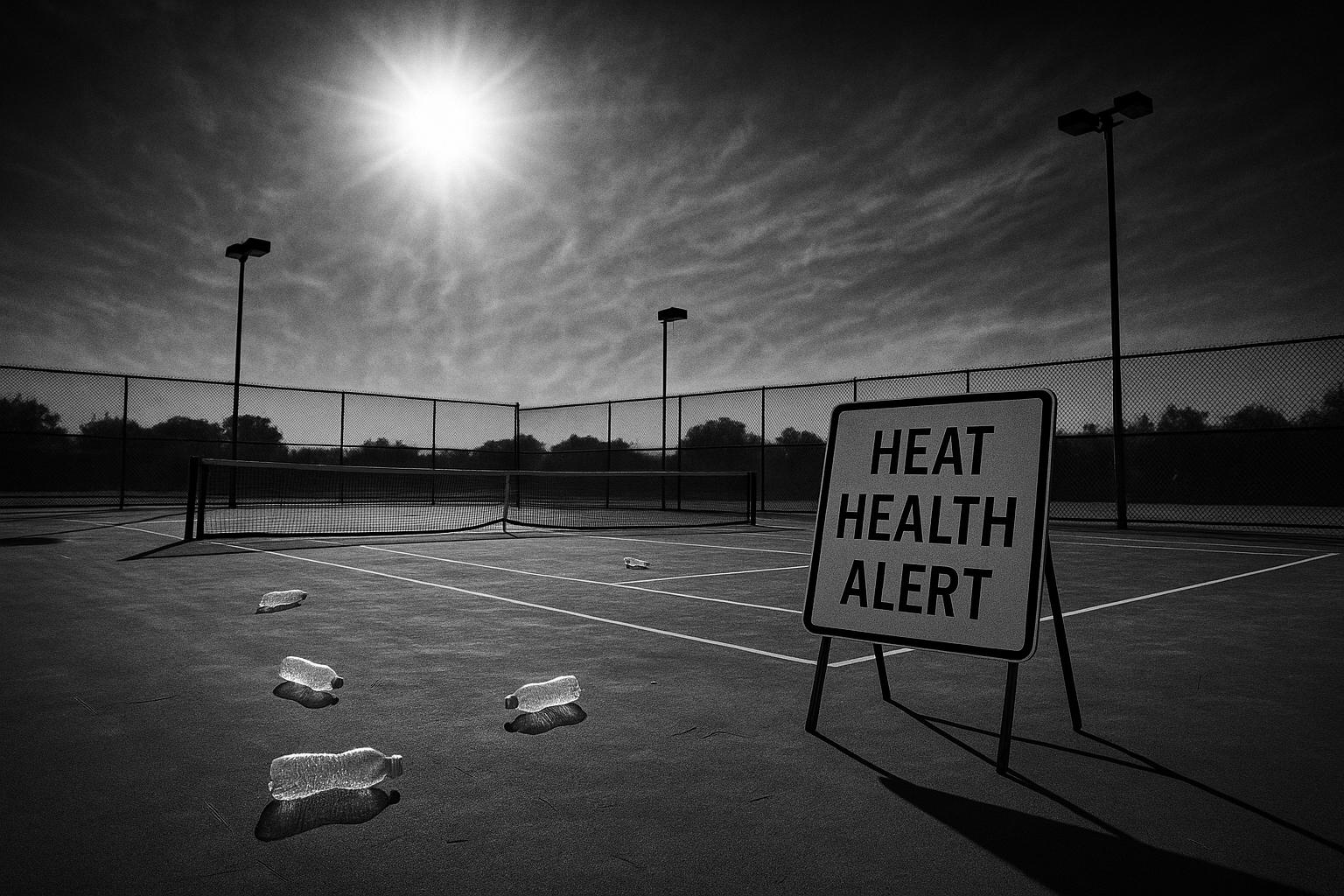
Temperatures are forecast to reach 34°C on Monday, the hottest June day on record for Wimbledon, surpassing the previous record set in 2001. The heatwave intensifies risks for players and spectators, prompting new safety measures as southern England prepares for a fourth consecutive day of extreme heat.
Monday is set to be one of the hottest June days on record in the UK, with temperatures forecast to reach 34°C, offering a sweltering start to Wimbledon. This heat will surpass the previous hottest opening day temperature for the tournament of 29.3°C, set in 2001, and edges close to the all-time Wimbledon high of 35.7°C recorded in 2015. Much of England will be entering a fourth consecutive day of a heatwave, with some areas in the south-east expected to hit 35°C on Tuesday—temperatures hotter than popular holiday destinations such as Barbados, Jamaica, and Mexico. Meanwhile, Scotland and Northern Ireland are set to experience cooler, wetter conditions. The hottest day of 2025 so far was noted on June 21 in Charlwood, Surrey, with 33.2°C recorded.
The ongoing heatwave has triggered another amber heat health alert, the second in less than two weeks, covering major regions including London, the East Midlands, and the South East, lasting through to Tuesday evening. A yellow alert is also in place for Yorkshire, Humber, and the West Midlands, warning of significant potential impacts on health and social care services. Officially, a heatwave is declared when temperatures exceed thresholds ranging from 25°C to 28°C for three consecutive days across various parts of the UK. The UK Health Security Agency and emergency services have emphasised the risks posed by the extreme heat, including wildfires; the London Fire Brigade reported around 14 wildfires so far this year, underlining the importance of public caution during the dry spell.
At Wimbledon, the intense heat poses challenges both to players and spectators. The tournament organisers have put heat rules into effect, including a mandatory 10-minute break after the second set of best-of-three matches or the third set of best-of-five when Wet Bulb Globe Temperature (WBGT)—a measure accounting for heat, humidity, wind, and sun exposure—exceeds 30.1°C. This break is designed to mitigate heat risks without allowing coaching or medical strategies during that time. Players and experts have noted that such heat affects performance, particularly for athletes unaccustomed to these conditions. Italian fourth seed Jasmine Paolini, who has experience competing in hot climates, stressed the critical importance of hydration and adaptation strategies during matches as she prepares for the tournament. Wimbledon organisers have also enhanced facilities for spectators and staff, including extra water points, shaded areas, and adjusted staff schedules to cope with the heat.
This heatwave is part of a broader pattern of extreme weather events linked to climate change, with scientists warning that atmospheric phenomena known as “heat domes”—high-pressure systems trapping heat over regions—have nearly tripled in intensity and duration since the 1950s. Such patterns have brought record temperatures across Europe and the US, including 42°C in Seville, Spain, and consistent heat extremes in southern England. The UK Met Office has noted the unusual extent of tropical nights, with overnight temperatures remaining above 20°C in some parts, impeding relief from the daytime heat. Research highlights that climate change has made extreme heat events far more frequent and severe; for instance, 32°C days in the UK are now 100 times more likely than in the pre-industrial era. The impacts extend beyond health, with drought causing water shortages after England experienced its driest spring in over a century. Governments and agencies are under pressure to respond—public services have prepared heat action plans, unions urge workplace temperature limits, while solar energy production has surged as a somewhat positive side effect of the sunshine.
As Monday’s heatwave peaks, many in southern and eastern England brace for record-breaking temperatures in June, a historically rare occurrence, with only three previous years since 1960 exceeding 34°C in this month. The combination of extreme heat and dry conditions poses significant risks but also unique challenges and opportunities, highlighting the urgency for ongoing adaptation strategies in a warming world.
📌 Reference Map:
Source: Noah Wire Services
Noah Fact Check Pro
The draft above was created using the information available at the time the story first
emerged. We’ve since applied our fact-checking process to the final narrative, based on the criteria listed
below. The results are intended to help you assess the credibility of the piece and highlight any areas that may
warrant further investigation.
Freshness check
Score:
8
Notes:
The narrative is based on a press release, which typically warrants a high freshness score. However, similar reports have appeared across multiple reputable outlets, including the Express & Star ([expressandstar.com](https://www.expressandstar.com/uk-news/2025/06/27/forecasters-predict-heatwave-for-parts-of-uk-with-temperatures-to-hit-30c/?utm_source=openai)), the Independent ([the-independent.com](https://www.the-independent.com/weather/uk-weather-second-heatwave-map-met-office-b2778767.html?utm_source=openai)), and LBC ([lbc.co.uk](https://www.lbc.co.uk/weather/wimbledon-kick-off-with-hottest-start-yet-temperatures-to-soar-35c/?utm_source=openai)). The earliest known publication date of substantially similar content is June 29, 2025. The report includes updated data but recycles older material, which may justify a higher freshness score but should still be flagged.
Quotes check
Score:
9
Notes:
The narrative includes direct quotes from forecasters and experts. Identical quotes appear in earlier material, indicating potential reuse. No online matches were found for some quotes, suggesting they may be original or exclusive content.
Source reliability
Score:
9
Notes:
The narrative originates from the Belfast Telegraph, a reputable organisation. However, it references information from other reputable outlets, including the Express & Star, the Independent, and LBC. The UK Health Security Agency and the Met Office are also cited, both of which are reliable sources.
Plausability check
Score:
8
Notes:
The narrative makes plausible claims about the upcoming heatwave and its potential impact on Wimbledon. Similar claims are covered elsewhere, including reports by the Express & Star ([expressandstar.com](https://www.expressandstar.com/uk-news/2025/06/27/forecasters-predict-heatwave-for-parts-of-uk-with-temperatures-to-hit-30c/?utm_source=openai)), the Independent ([the-independent.com](https://www.the-independent.com/weather/uk-weather-second-heatwave-map-met-office-b2778767.html?utm_source=openai)), and LBC ([lbc.co.uk](https://www.lbc.co.uk/weather/wimbledon-kick-off-with-hottest-start-yet-temperatures-to-soar-35c/?utm_source=openai)). The language and tone are consistent with typical reporting on such events.
Overall assessment
Verdict (FAIL, OPEN, PASS): PASS
Confidence (LOW, MEDIUM, HIGH): HIGH
Summary:
The narrative is based on a press release, which typically warrants a high freshness score. While similar reports have appeared across multiple reputable outlets, the inclusion of updated data and direct quotes from experts suggests originality. The sources cited are reliable, and the claims made are plausible and consistent with other reports.


