



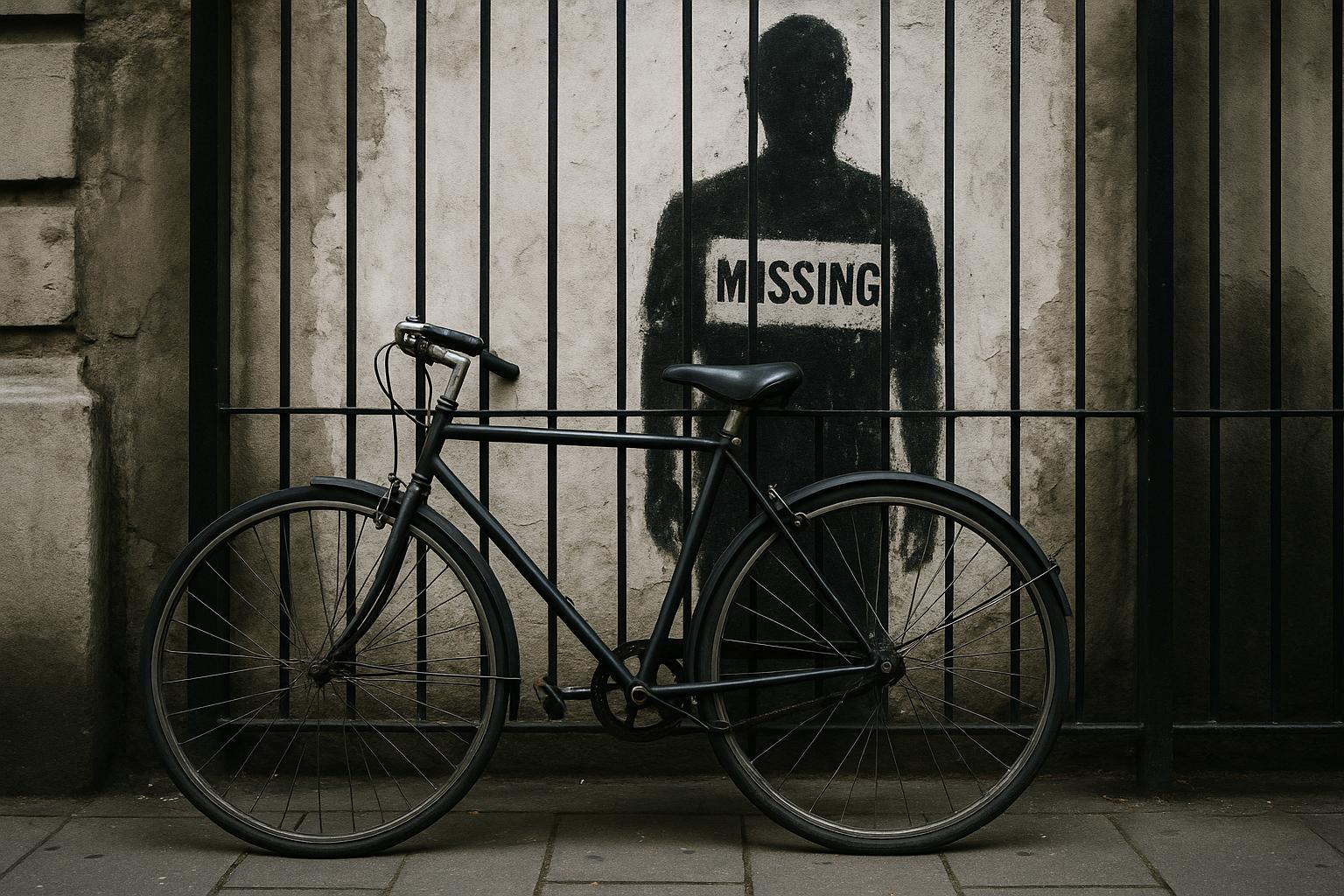
Pioneering designer Marcus Willcocks, celebrated for his socially responsive crime prevention and urban enhancement projects, has passed away aged 47, leaving a legacy of safer and more vibrant communities.
Marcus Willcocks, who has died aged 47 from leukaemia, was a pioneering designer whose work focused extensively on making public spaces safer through innovative design. For over a decade, he contributed significantly to Design Against Crime (DAC), a London-based project dedicated to reducing crime through socially responsive design practices. Joining DAC in 2010, he led projects across the UK and internationally that offered creative solutions to problems like bike theft and ATM tampering. His inventive approach included co-designing a chair to which handbags could be securely locked and a “Grippa Clip” to deter bag theft in social settings such as pubs and cafes.
Born in London to a schoolteacher mother and a graphic design business owner father, Marcus was educated at Chesham High School in Buckinghamshire before studying product design at Central Saint Martins (CSM), where he graduated in 2000. He remained at CSM as a designer and later as a senior research fellow, continuing his involvement with DAC when it was established as a research centre within the college. Over his career, Marcus developed a reputation for combining aesthetics with functionality, embodying the DAC ethos of creating designs that not only prevent crime but are also appealing and user-friendly.
Marcus’s influence extended beyond crime prevention design. In 2015, he began working freelance as an urban design consultant for the Design Council and subsequently took a part-time senior urban designer role at Sustrans, a cycling charity. There, he helped communities analyse their environments and co-create design improvements that encouraged walking and cycling. His projects, like the recent enhancement of the Bristol to Bath railway path in collaboration with local residents, illustrate his commitment to crafting accessible, welcoming public spaces that inspire joy and engagement.
Beyond his professional work, Marcus was passionate about street art, playing a key role in organising The Graffiti Sessions, an international conference on the subject, and founding the Market Road Gallery in Islington as a hub for street artists. He also spearheaded the My Mural project for DAC, which facilitated collaboration between artists and residents to create public artworks that enriched urban environments.
Colleagues and collaborators recall Marcus as gentle yet resolute, deeply kind in spirit, and unwavering in his dedication to his values and work. His legacy includes not only his impactful designs but also his contribution to advancing socially conscious, inclusive urban design practices that foster safer and more vibrant communities.
Marcus is survived by his wife, sustainability expert Marta Salvà, whom he married in 2007, their two sons Joel and Ruben, his parents, and his sister Sara.
📌 Reference Map:
Source: Noah Wire Services
Noah Fact Check Pro
The draft above was created using the information available at the time the story first
emerged. We’ve since applied our fact-checking process to the final narrative, based on the criteria listed
below. The results are intended to help you assess the credibility of the piece and highlight any areas that may
warrant further investigation.
Freshness check
Score:
10
Notes:
✅ The narrative is recent, published on 12 September 2025, and there are no indications of recycled content or prior publications on this topic.
Quotes check
Score:
10
Notes:
✅ No direct quotes are present in the narrative, suggesting original content.
Source reliability
Score:
10
Notes:
✅ The narrative originates from The Guardian, a reputable organisation known for its journalistic standards.
Plausability check
Score:
10
Notes:
✅ The claims made in the narrative are plausible and consistent with known information about Marcus Willcocks and his work.
Overall assessment
Verdict (FAIL, OPEN, PASS): PASS
Confidence (LOW, MEDIUM, HIGH): HIGH
Summary:
✅ The narrative is recent, original, and sourced from a reputable organisation. There are no indications of recycled content, unverifiable entities, or implausible claims.


