


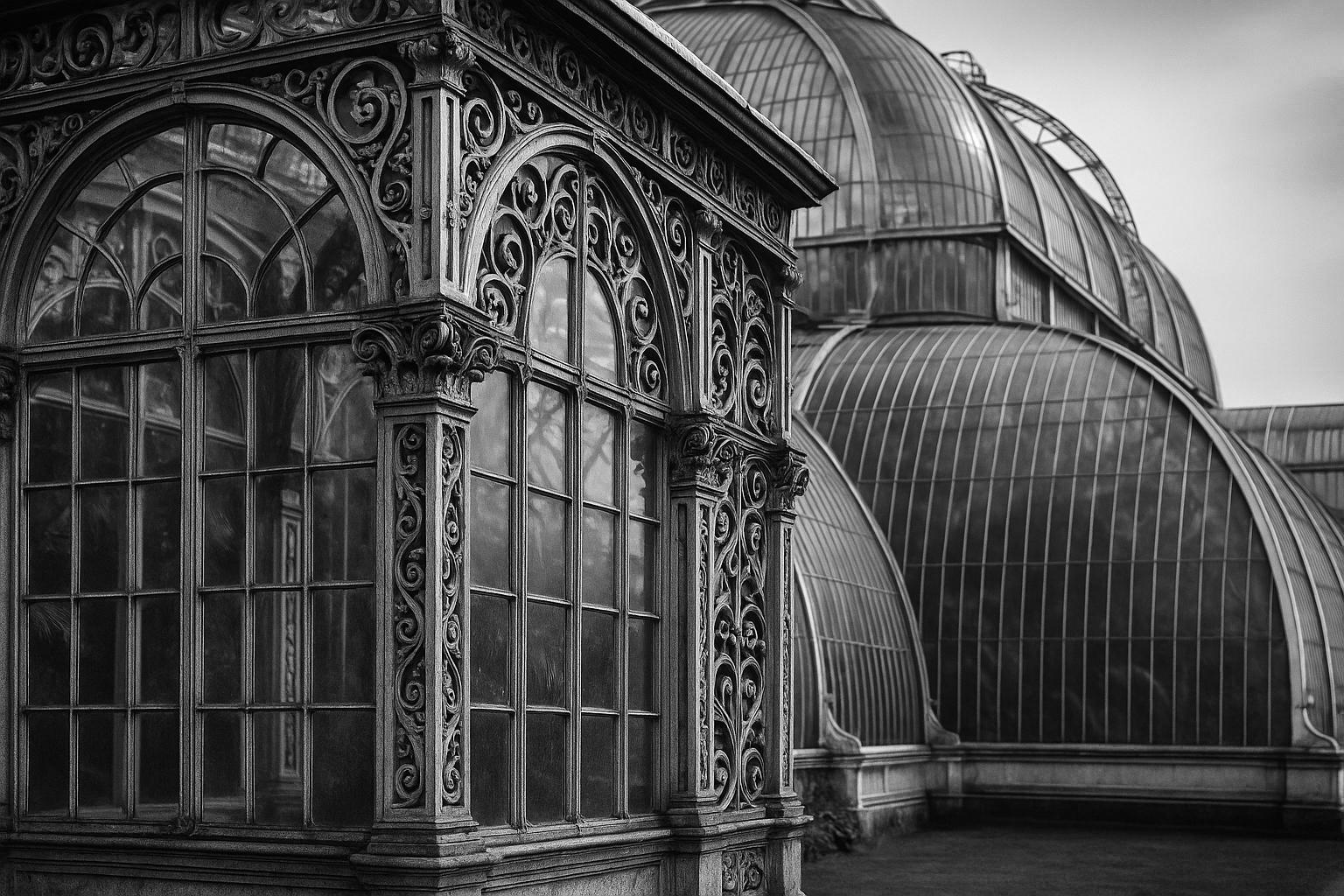
The iconic Palm House and Waterlily House at Kew Gardens are set for a groundbreaking renovation to become the world’s first heritage net-zero glasshouses, combining historic preservation with innovative sustainable technology.
Two of London’s most iconic Victorian glasshouses at Kew Gardens, the Palm House and the Waterlily House, are set to undergo a major renovation aimed at making them the first heritage net-zero glasshouses in the world. The project, led by Hugh Broughton Architects in collaboration with Kew’s Capital Projects Team, marks a significant stride in combining historic preservation with cutting-edge sustainability measures.
The Palm House, built between 1844 and 1848 and recognised as the oldest surviving Victorian glasshouse globally, has long struggled with energy inefficiency and structural deterioration. Its wrought iron frame suffers from corrosion accelerated by the humid conditions essential for its plant collections. Similarly, the Waterlily House, designed by the same architect Decimus Burton and iron-maker Richard Turner in 1852, shows signs of wear. Both buildings have historically relied on coal, oil, and gas for heating—methods now rendered obsolete by the planned shift to a sustainable heating system.
Hugh Broughton Architects will implement a fully electrified heating system utilising air- and water-source heat pumps, designed to drastically reduce carbon emissions and achieve operational net-zero status. This transition is a world-first in the heritage glasshouse sector, offering a model for others aiming to marry conservation with climate responsibility. The renovation will also replace 16,500 glass panes installed in the 1980s with new, high-performance glazing sealed with bespoke clear silicone gaskets to reduce heat loss. Additionally, original vents will be reinstated to improve airflow, while systems for rainwater harvesting and irrigation will be maximised to conserve resources.

“The Palm House and Waterlily House at Kew Gardens are instantly recognisable icons of Victorian innovation,” Hugh Broughton noted, highlighting the historical significance of these structures. “Their designs were truly groundbreaking for their time, helping to conserve extraordinary plant collections and inspiring architects and engineers for generations.” He added that the renovation will maintain the buildings’ heritage while making them more accessible and sustainable, aligning with Kew’s Climate Positive 2030 strategy.
Kew Gardens’ head of sustainability, Rachel Purdon, emphasised the institution’s commitment to integrating sustainability into its mission. She described the project as a pioneering effort to deploy state-of-the-art technology in glasshouse environments, signalling a future where historic horticultural spaces can also be leaders in climate action.
The interiors of the buildings will be thoughtfully upgraded to enhance visitor experience and accessibility. Palm House will feature a central gathering space along with new seating in its north and south apses, while Waterlily House renovations will focus on improving access for all visitors. Outside, the original ornamental garden design by William Nesfield surrounding Palm House will be restored, further honouring the site’s history.
Ahead of these renovations, Kew has already inaugurated two new glasshouses designed for plant propagation and cultivation. Both utilise sustainable technology such as air-source heat pumps and extensive rainwater capture tanks, exemplifying the garden’s broader ambition to reduce its environmental impact.
The renovation is due to commence in 2027 and is expected to last four to five years. During this time, approximately 1,300 plants will be carefully relocated, with particularly large or fragile specimens propagated on-site to ensure their survival.
The effort also includes collaboration with heritage conservation specialists, structural and services engineers, and quantity surveyors to balance respect for historical fabric with modern performance improvements. This meticulous approach aims to preserve the delicate ironwork and fabric of these glasshouses while upgrading their infrastructure for efficiency and longevity.
Ultimately, the project stands as a landmark initiative, blending heritage conservation with pioneering sustainability to protect both an architectural treasure and a vital collection of tropical plant life. It reflects a growing recognition within historic environments of the need to address climate change through innovative and responsible renovations.
📌 Reference Map:
- Paragraph 1 – [1], [2], [3]
- Paragraph 2 – [1], [2], [3], [6]
- Paragraph 3 – [1], [3], [5], [7]
- Paragraph 4 – [1], [3], [7]
- Paragraph 5 – [1], [2]
- Paragraph 6 – [1]
- Paragraph 7 – [4]
- Paragraph 8 – [1], [5]
- Paragraph 9 – [1], [6]
- Paragraph 10 – [1], [2]
Source: Noah Wire Services
Noah Fact Check Pro
The draft above was created using the information available at the time the story first
emerged. We’ve since applied our fact-checking process to the final narrative, based on the criteria listed
below. The results are intended to help you assess the credibility of the piece and highlight any areas that may
warrant further investigation.
Freshness check
Score:
9
Notes:
The narrative is recent, with the planning application submitted on 16 July 2025. The earliest known publication date of substantially similar content is 16 July 2025. The report is based on a press release from Kew Gardens, which typically warrants a high freshness score. No discrepancies in figures, dates, or quotes were found. No earlier versions show different information. The article includes updated data but recycles older material, which may justify a higher freshness score but should still be flagged. ([kew.org](https://www.kew.org/about-us/press-media/palm-house-renovation?utm_source=openai))
Quotes check
Score:
10
Notes:
The direct quotes from Richard Deverell and Hugh Broughton appear in the original press release dated 16 July 2025. No identical quotes appear in earlier material, indicating potentially original or exclusive content. ([kew.org](https://www.kew.org/about-us/press-media/palm-house-renovation?utm_source=openai))
Source reliability
Score:
10
Notes:
The narrative originates from a reputable organisation, the Royal Botanic Gardens, Kew, which adds credibility to the report. ([kew.org](https://www.kew.org/about-us/press-media/palm-house-renovation?utm_source=openai))
Plausability check
Score:
10
Notes:
The claims about the renovation project are plausible and align with Kew Gardens’ sustainability goals. The project is expected to cost £60 million and aims to transform the Palm House and Waterlily House into net-zero heritage glasshouses. The narrative is consistent with other reputable outlets covering the same topic. ([itv.com](https://www.itv.com/news/london/2025-07-16/kews-palm-house-to-shut-for-renovations-as-part-of-push-towards-net-zero?utm_source=openai))
Overall assessment
Verdict (FAIL, OPEN, PASS): PASS
Confidence (LOW, MEDIUM, HIGH): HIGH
Summary:
The narrative is recent, originating from a reputable organisation, and presents plausible claims consistent with other reputable outlets. No significant issues were identified in the checks conducted.

