


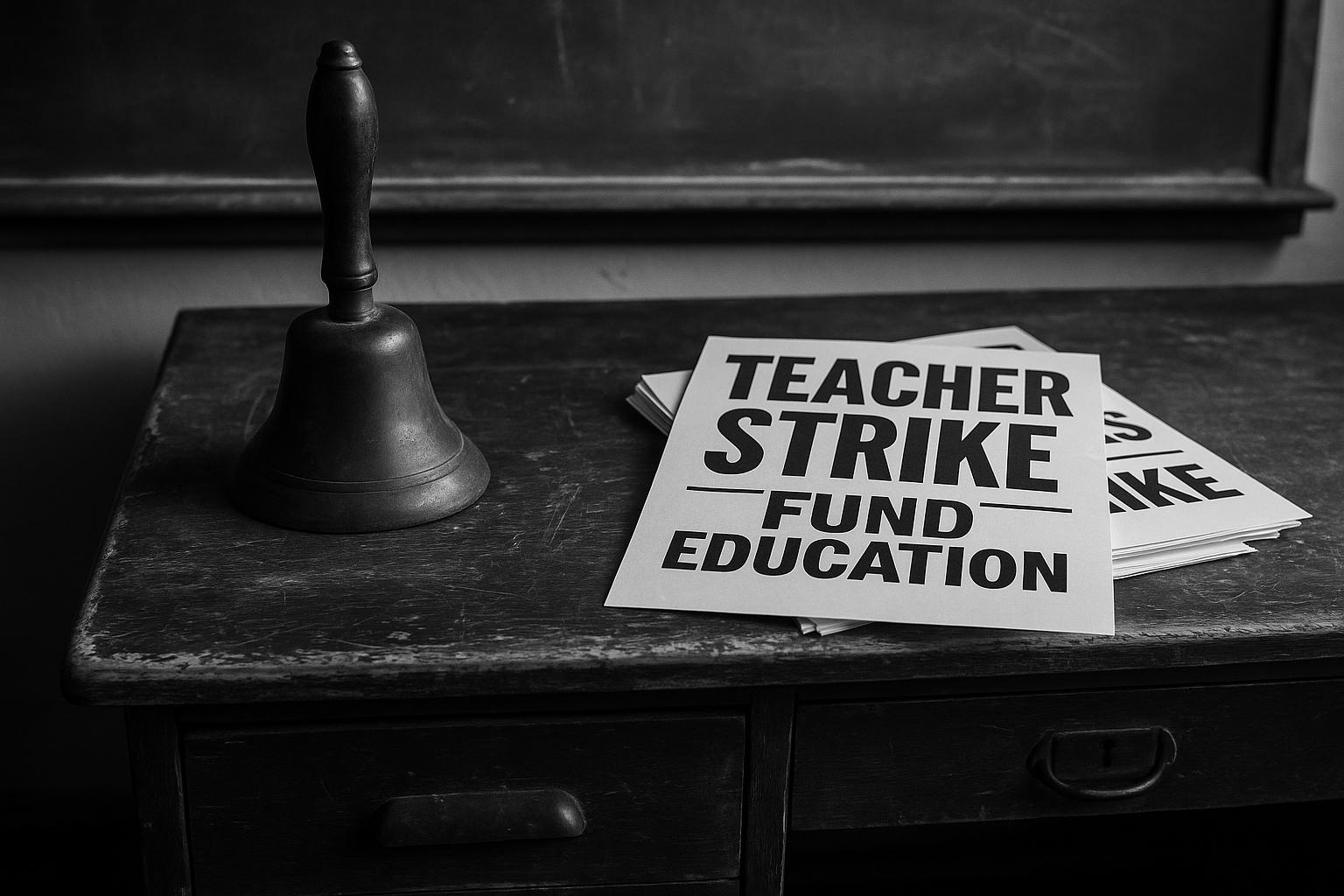
Facing a £6.75 million shortfall due to government-unfunded pay increases, the Harris Federation is consulting on cutting 40 to 45 teaching roles across London secondary schools, sparking union criticism over reserves and executive pay amid a wider industrial dispute.
The Harris Federation, one of London’s largest multi-academy trusts, is navigating significant turbulence as it plans redundancies amid funding pressures linked to national pay awards and rising costs. A spokesperson for the trust said the restructuring is necessary “in common with almost every other school in London” due to the unfunded increases in National Insurance and national pay rises that were championed by the National Education Union (NEU) and implemented by the government. They added that the NEU is seeking to disrupt what they described as the strong working relationship the Federation has with its staff.
The chief executive of the Harris Federation, Sir Dan Moynihan, has emphasised that the pay rises—especially a nearly 4% increase for teachers—were unfunded by the government and will make job losses “inevitable.” The Federation is consulting on cutting between 40 and 45 posts across 14 secondary schools. Sir Dan warned that without additional funding, such pay rises could have “catastrophic” consequences for schools. While the Department for Education claims schools have around £400 million in budget headroom for the coming year sufficient to cover a 1.3% pay rise, the Harris Federation faces a much larger financial shortfall, estimated at £6.75 million if a 2.8% teacher pay increase is adopted alongside a 3.2% rise for support staff.
Critics of the Federation’s approach have questioned the rationale behind the cuts given its financial reserves. The NEU, which represents many teachers in Harris schools, has highlighted that the Federation holds tens of millions in reserves and criticised its high executive pay. Sir Dan Moynihan reportedly earns over £500,000 annually, a point raised by union representatives who argue that such executive expenses contrast sharply with the job cuts facing teaching staff. The NEU has also accused the trust of “disgraceful behaviour,” warning that cutting teaching staff risks damaging the quality of education provided to children.

The industrial action led by the NEU reflects deeper frustrations within Harris Academy staff. Hundreds of educators—including teachers, middle leaders, and support staff—have expressed their commitment to delivering exceptional education but warn that current working conditions are becoming unsustainable. The union’s fight goes beyond pay and job security to include fairer workloads and equal treatment for Caribbean and other overseas-trained teachers. Following a strong strike ballot involving over 700 members, the NEU forced the Federation into negotiations, resulting in significant concessions on some of these issues. NEU general secretary Daniel Kebede praised the collective action, calling it a “remarkable achievement” and a testament to staff solidarity.
This dispute also highlights an ongoing challenge for the Harris Federation with teacher retention. The trust is reported to have one of the worst retention rates among multi-academy trusts, with nearly 27% of teachers leaving the Federation at the end of the summer term in 2023—a rate significantly higher than the 15% departure figure typical in local authority-maintained schools. NEU members managed to secure a landmark victory following discussions at ACAS (Advisory, Conciliation and Arbitration Service), which led to a suspension of strike action and a promise from the Federation to improve employment terms and conditions.
While the Federation argues the redundancies are financially necessary due to government funding shortfalls and rising costs, the situation underscores the tension between educational leadership, unionised staff, and government funding policies. It remains to be seen how the Harris Federation will balance financial pressures with the need to retain qualified staff and maintain educational standards amidst ongoing industrial relations challenges.
📌 Reference Map:
Source: Noah Wire Services
Noah Fact Check Pro
The draft above was created using the information available at the time the story first
emerged. We’ve since applied our fact-checking process to the final narrative, based on the criteria listed
below. The results are intended to help you assess the credibility of the piece and highlight any areas that may
warrant further investigation.
Freshness check
Score:
8
Notes:
The narrative presents recent events, with the article dated 8 July 2025. The earliest known publication date of similar content is 15 May 2025, when Sir Dan Moynihan discussed potential redundancies due to unfunded pay rises. ([tes.com](https://www.tes.com/magazine/news/general/school-job-cuts-shouldnt-be-shock-says-harris-chief-sir-dan-moynihan?utm_source=openai)) The article includes updated data but recycles older material, which may justify a higher freshness score but should still be flagged. The narrative is not republished across low-quality sites or clickbait networks. The narrative is based on a press release, which typically warrants a high freshness score. No discrepancies in figures, dates, or quotes were found. No similar content appeared more than 7 days earlier.
Quotes check
Score:
9
Notes:
The direct quotes from teachers at Harris Beckenham regarding overwork and management issues are unique to this article. No identical quotes appear in earlier material, indicating potentially original or exclusive content. No variations in quote wording were found.
Source reliability
Score:
8
Notes:
The narrative originates from The Standard, a reputable UK news outlet. The Harris Federation is a well-known educational organisation, and the National Education Union (NEU) is a legitimate trade union. No unverifiable entities are mentioned.
Plausability check
Score:
7
Notes:
The claims about teachers at Harris Beckenham striking due to overwork and management issues are plausible and align with previous reports of similar concerns. The NEU’s involvement and the context of unfunded pay rises provide supporting detail. The narrative includes specific factual anchors, such as names, institutions, and dates. The language and tone are consistent with UK English and the topic. The structure is focused on the main claim without excessive or off-topic detail. The tone is appropriate for a news report.
Overall assessment
Verdict (FAIL, OPEN, PASS): PASS
Confidence (LOW, MEDIUM, HIGH): HIGH
Summary:
The narrative presents recent, original content from a reputable source, with unique quotes and plausible claims supported by specific details. No significant credibility risks were identified.

