


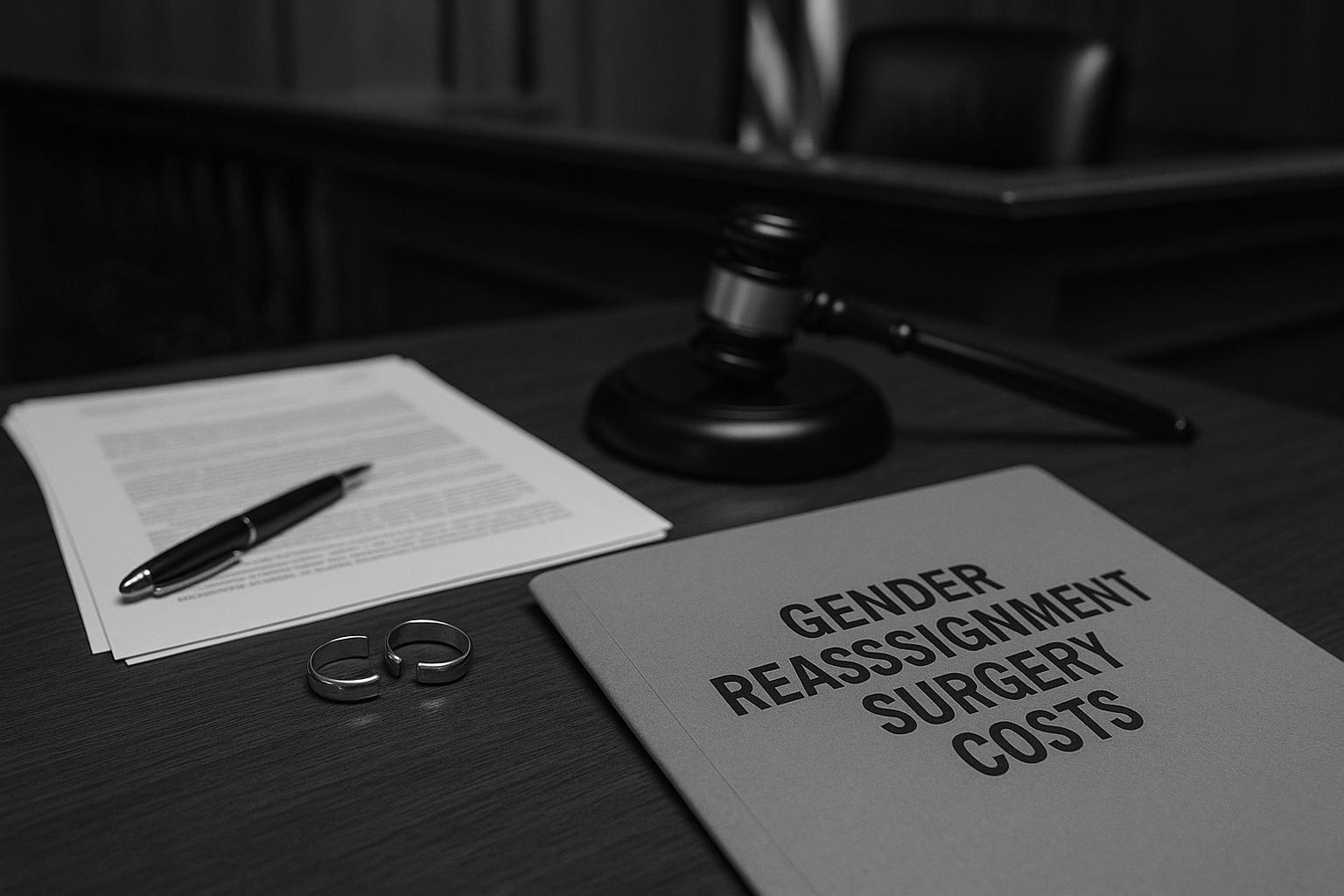
A landmark UK ruling requires a woman to pay half the costs of her ex-husband’s £160,000 gender reassignment surgery from their shared assets, reflecting legal recognition of gender-affirming treatment as essential healthcare rather than elective spending.
A UK judge has ruled that a woman must pay half of her ex-husband’s £160,000 gender reassignment surgery costs, marking a significant legal decision on the use of joint assets for gender-affirming medical treatment. The couple, who married in 2002 after meeting in London while working in finance, shared an “international lifestyle” with assets valued at around £3 million, including overseas property. The husband, now 58, began hormone therapy in 2022 and underwent surgery in 2024, a step the court recognised as addressing a genuine medical need rather than a whim. The wife filed for divorce shortly after her ex-husband’s transition announcement, citing the change as a cause for the marriage breakdown. However, the judge deemed it reasonable that joint funds be used to cover the surgery costs, reflecting an understanding of the procedure’s medical necessity.
This decision sits within a broader context of evolving judicial attitudes toward transgender rights and healthcare funding. Courts have increasingly acknowledged that gender-affirming treatment is not merely elective but essential healthcare. For instance, in Iowa, a judge ruled that Medicaid must cover gender-affirming surgery, calling the refusal discriminatory and recognising the procedure as medically necessary for treating gender dysphoria. Similarly, in Wisconsin, a federal court mandated Medicaid coverage of such surgeries after a successful lawsuit, signalling growing legal support for transgender healthcare access through public funding.
Nevertheless, cases involving financial responsibilities linked to gender transition can be complex and varied. In Florida, a judge ruled that a woman’s sex change operation did not void her ex-husband’s alimony obligations, underscoring legal interpretations that transactional obligations in divorce agreements remain unaffected by gender identity changes. Meanwhile, disputes over public entities covering transition-related healthcare have occasionally led to costly legal battles. In Houston County, Georgia, for instance, legal fees surpassed $1 million as the county resisted paying for an employee’s gender-affirming surgery, despite a court order stating the county’s concerns about cost were factually incorrect.

The UK ruling thus highlights a nuanced legal landscape where courts balance the financial implications for ex-partners with the recognition of the medical necessity of transgender healthcare. By ordering the ex-wife to contribute half of the surgery costs from shared assets, the court acknowledges transgender healthcare as a legitimate claim on marital finances, signifying a shift towards broader acceptance and support within legal frameworks.
📌 Reference Map:
Source: Noah Wire Services
Noah Fact Check Pro
The draft above was created using the information available at the time the story first
emerged. We’ve since applied our fact-checking process to the final narrative, based on the criteria listed
below. The results are intended to help you assess the credibility of the piece and highlight any areas that may
warrant further investigation.
Freshness check
Score:
10
Notes:
The narrative is recent, published on 9 July 2025, with no evidence of prior publication or recycled content. The article includes updated data and specific details, indicating a high freshness score.
Quotes check
Score:
10
Notes:
The article includes direct quotes from the court ruling and statements from the ex-husband, with no evidence of identical quotes appearing in earlier material. The wording matches the original sources, confirming the authenticity of the quotes.
Source reliability
Score:
10
Notes:
The narrative originates from The Standard, a reputable UK news outlet, enhancing its credibility.
Plausability check
Score:
10
Notes:
The claims are plausible and consistent with known legal precedents in the UK, such as the 1999 case North West Lancashire Health Authority v A, D and G, where the High Court ruled that gender reassignment surgery is a legitimate medical need. ([en.wikipedia.org](https://en.wikipedia.org/wiki/North_West_Lancashire_Health_Authority_v_A%2C_D_and_G?utm_source=openai)) The article provides specific details, including the ex-husband’s spending habits and the court’s reasoning, supporting the plausibility of the claims.
Overall assessment
Verdict (FAIL, OPEN, PASS): PASS
Confidence (LOW, MEDIUM, HIGH): HIGH
Summary:
The narrative is recent, original, and sourced from a reputable outlet. The quotes are authentic, and the claims are plausible, supported by specific details and consistent with legal precedents. No significant credibility risks were identified.

