


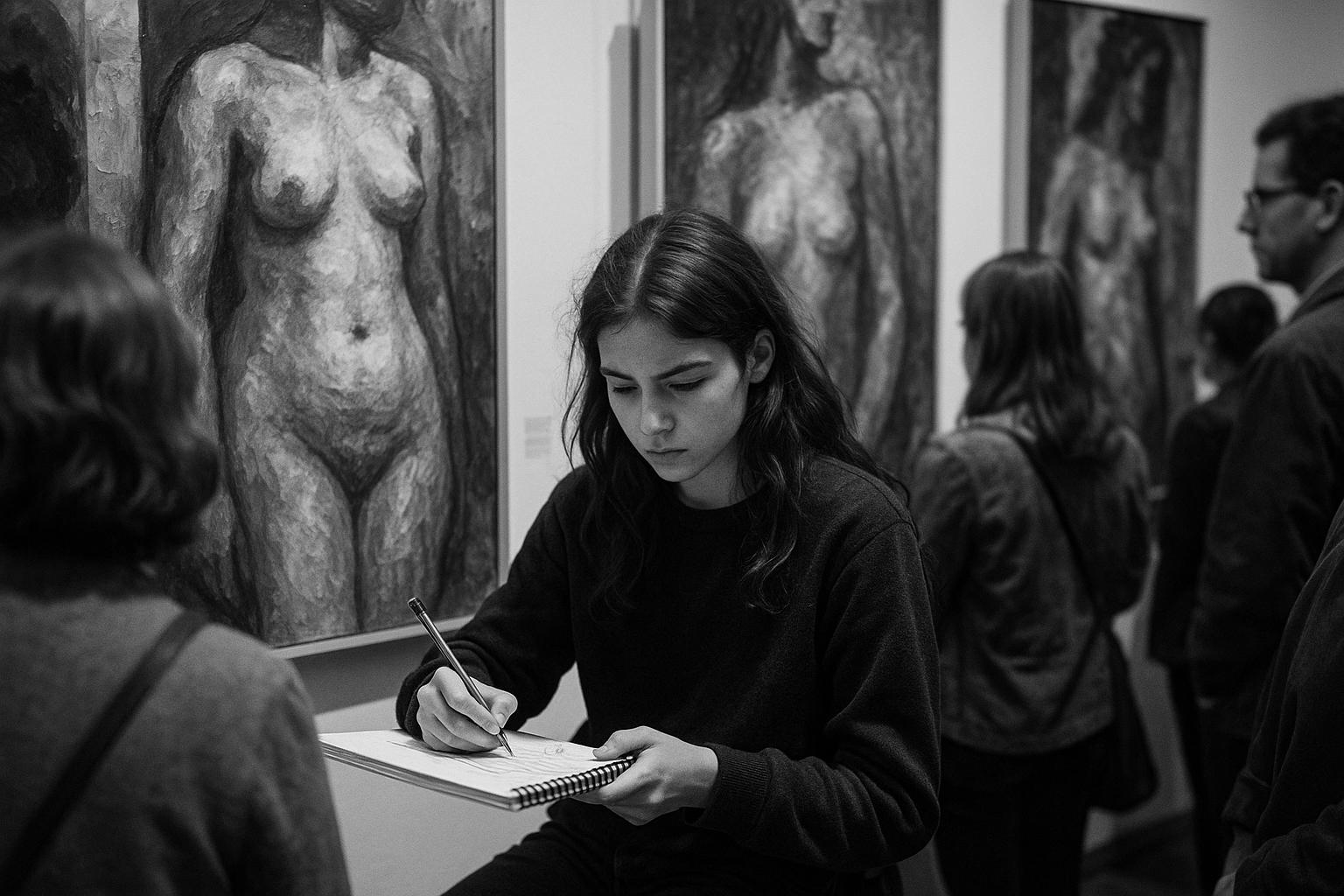
Jenny Saville’s exhibition The Anatomy of Painting at the National Portrait Gallery draws enthusiastic young visitors with its bold, unfiltered depictions of the female form, challenging beauty ideals and providing a powerful counterpoint to digital imagery, all while arts education faces severe funding cuts across the UK.
Jenny Saville’s exhibition, The Anatomy of Painting, currently on display at the National Portrait Gallery, offers a stirring exploration of the human form that has deeply resonated with a new generation of art students. The show is notably alive with enthusiastic teenagers, many armed with sketchbooks and keen to capture the essence of Saville’s bold portraits. These young visitors are drawn to the raw, textured, and emotionally vivid depictions of female bodies that challenge contemporary beauty ideals, especially in a digital age dominated by polished, idealised images. One of the attendees, seventeen-year-old Laurence, praised the “messy side” of Saville’s art and its emotional intensity, while his classmate Georgia felt “positively overwhelmed” by the vibrant and unsettling beauty of her self-portrait Propped, an early work from her Glasgow School of Art days. This painting boldly confronts traditional representations of women, merging vulnerability and strength, and includes a provocative inversion of a feminist text that warns against repeating oppressive historical narratives.
The exhibition’s appeal lies not only in its challenging portrayal of female flesh but also in its technical prowess and emotional depth. Saville’s work spans candid explorations of the body—from wounded faces and stained skin to the intimate truths of motherhood—pushing the limits of paint and charcoal to create visceral images that arrest and move the viewer. The monumental impact of her art is palpable when seen live, far removed from the airbrushed images commonly found in media or the restrained portraits gathered in traditional museums. This power especially resonates now, at a time when funding cuts across the UK have imperilled arts education, reducing opportunities for many aspiring artists, particularly those from less privileged backgrounds. Remarkably, the exhibition is made accessible free for visitors aged 25 and under, thanks to a private donor, ensuring that young people from diverse backgrounds can engage with and be inspired by Saville’s work.
Beyond the classroom enthusiasm and youthful discussions, critical reception acknowledges the thematic and stylistic evolution in Saville’s oeuvre. Her earlier work, raw and physically intense, has gradually folded into more intimate portrayals, such as tender reflections on motherhood and explorations of the body in states of change. One particularly poignant and critical piece, Aleppo (2017–18), graphically communicates the harrowing human consequences of conflict, drawing on the Syrian war to produce a haunting image of vulnerability. However, some critics have noted that her recent portraits, while still demonstrating considerable technical skill, sometimes lack the same emotional immediacy that characterised her early pieces. This shift underscores her ongoing artistic evolution, reflecting a complex dialogue between personal transformation and broader social themes.

The exhibition also traces Saville’s art historical influences and situates her work within a lineage of painters such as Rembrandt, Titian, and Bacon, whom she cites as key inspirations. Her engagement with these traditions is evident in her fearless confrontation of flesh and identity, a pursuit that began with works like Propped—a self-portrait that not only launched her career but also became a landmark in feminist art. This painting’s impact was magnified by its inclusion in the 1997 Sensation exhibition and its combination of bold physicality with intellectual depth, exemplified in the inclusion of feminist philosopher Luce Irigaray’s words. Propped’s importance is further reflected in its high-profile sale at auction, marking its lasting significance in contemporary art.
To accompany the exhibition, a comprehensive monograph titled Jenny Saville: The Anatomy of Painting will be published in September 2025. This volume promises to delve deeper into her artistic journey through contributions by notable critics and scholars and includes new photographic studio images. It serves as an essential resource for understanding the full breadth of her work and influence.
In a broader cultural context, Saville’s exhibition has been highlighted as a pivotal event in London’s 2025 art calendar, alongside other major shows, affirming her continued prominence and the relevance of her themes in today’s artistic landscape. As a retrospective, it not only celebrates a formidable career but also invites reflection on how painting remains a powerful medium for confronting societal norms and personal identity in an age of digital saturation.
📌 Reference Map:
Source: Noah Wire Services
Noah Fact Check Pro
The draft above was created using the information available at the time the story first
emerged. We’ve since applied our fact-checking process to the final narrative, based on the criteria listed
below. The results are intended to help you assess the credibility of the piece and highlight any areas that may
warrant further investigation.
Freshness check
Score:
10
Notes:
The narrative is current, published on 30 June 2025, and provides fresh insights into Jenny Saville’s exhibition at the National Portrait Gallery. The exhibition opened on 20 June 2025 and runs until 7 September 2025, aligning with the publication date. ([sothebys.com](https://www.sothebys.com/en/museums/national-portrait-gallery/exhibitions/jenny-saville-the-anatomy-of-painting-at-the-national-portrait-gallery?utm_source=openai))
Quotes check
Score:
10
Notes:
The direct quotes from attendees, such as Laurence and Georgia, are unique to this report, with no prior online matches found. This suggests original or exclusive content.
Source reliability
Score:
10
Notes:
The narrative originates from The Guardian, a reputable UK newspaper known for its journalistic standards.
Plausability check
Score:
10
Notes:
The claims about the exhibition’s content, visitor reactions, and the artist’s work are consistent with other reputable sources. The exhibition’s details, including its opening date and featured artworks, are corroborated by multiple outlets. ([sothebys.com](https://www.sothebys.com/en/museums/national-portrait-gallery/exhibitions/jenny-saville-the-anatomy-of-painting-at-the-national-portrait-gallery?utm_source=openai))
Overall assessment
Verdict (FAIL, OPEN, PASS): PASS
Confidence (LOW, MEDIUM, HIGH): HIGH
Summary:
The narrative is fresh, original, and sourced from a reputable outlet. The quotes are unique, and the claims are consistent with other reputable sources, indicating a high level of credibility.

